Culture shock can be a disorienting experience for many people coming to America, so giving them grace as they adjust and learn is our responsibility.
By: Shaylin Bogart
The students at Redwood, for the most part, are used to the Redwood campus and how American education works, but what is it like from an outside perspective? We should listen and learn about schools in other countries, and the culture shock that exchange students experience when coming to an American school.
At Redwood High School, we have limited knowledge on people and life outside of the U.S. and it is important to get to know exchange students and learn from them.
We should also guide them through the culture shocks they face and help them learn about life in America.
Ali Sharifzade, ’26, an exchange student from Azerbaijan, he says, “You need a car to go everywhere, but since I can’t drive here, that was kind of like, a shock, a difference. There’s not much public transportation.”
A common critique regarding the U.S. is that most of the time there is not enough public transportation to easily get around like there is in other countries.
Because of the lack of public transportation many people are forced to drive around in cars rather than having the ability to take a bus, or take a train. This could make it difficult to make it to school.
Koa Kubo, ’26, an exchange student from Japan, says that school and teachers in Japan are much more strict, such that students are not allowed to eat or talk in class, students must wear uniforms, and clean up the school campus themselves.
She was shocked when she came to the U.S. and saw students eating in class, as well as being in classes with friendly teachers rather than strict ones that enforce rules.
School in Japan vs the U.S. is incredibly different in multiple ways, but there are still similarities and differences between schools there and here which are important to learn about to understand each other.
Mr. Nick Miller, the AP Lit, Photography, as well as Journalism teacher here at Redwood, says, “I’ve learned so much. I think I’ve learned a lot more from my foreign exchange students than they’ve learned from me; I’ve learned that American education has some serious problems because maybe we’re overfocused on sports.”
To truly expand the mind and understand more about the floating rock we live on, meeting people from a different background is a necessary part of understanding humans on all sides of the equator.
To imagine yourself in the shoes of a foreign exchange student, in an entirely different continent, is difficult for sure.
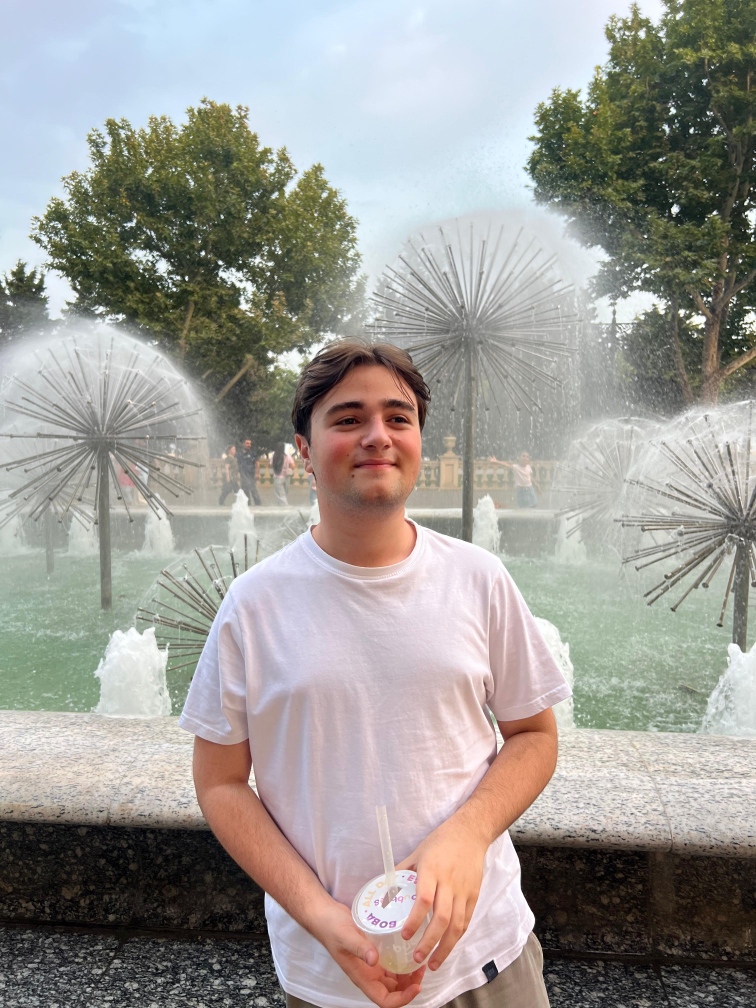
Photo courtesy of Sharifzade.
But it is a part of the human experience to put yourself in the position of others and respond properly.
Ali Sharifzade says, “Freedom of speech in America is a very big thing. Even in very, like, countries in Europe, Western Europe, they don’t have the full freedom of speech like you have here.”
A part of living in the U.S. that many take for granted is the full freedom of speech we get in this country.
There are many countries that do not allow their people to speak freely. In fact, in some countries, you may face imprisonment for simply speaking out.
Which is why it is so important to learn and understand people from other countries, we have so much knowledge to gain, all we have to do is open our minds and ask questions, be curious about the environment around you and the people no matter what background.
Mr. Miller says, “I always joke with them that I’m going to give you a year, and then when I retire I get to sleep on your couch for a week, no matter where you live.”

Shaylin Bogart
Tags: clubs & lifestyles, culture shock, opinion piece, redwood gigantea, redwood high school, visalia ca